
Common Charger Directive (CCD)
Common Charging Interface
The CCD is EU legislation that introduced common charging requirements for certain portable consumer electronic devices.
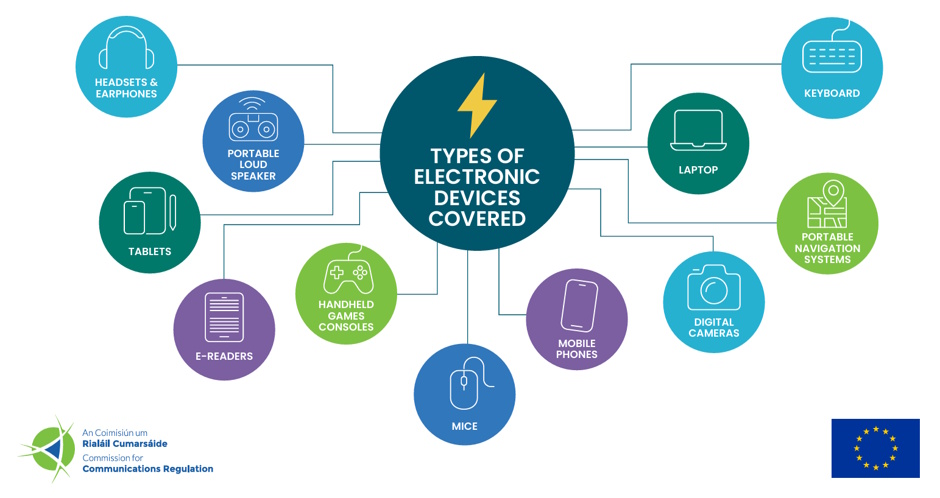
The ‘common charging’ requirements apply to all handheld mobile phones, tablets, digital cameras, headphones, headsets, portable speakers, handheld videogame consoles, e-readers, earbuds, keyboards, mice, and portable navigation systems since 28 December 2024. These requirements also apply to laptops from 28 April 2026.
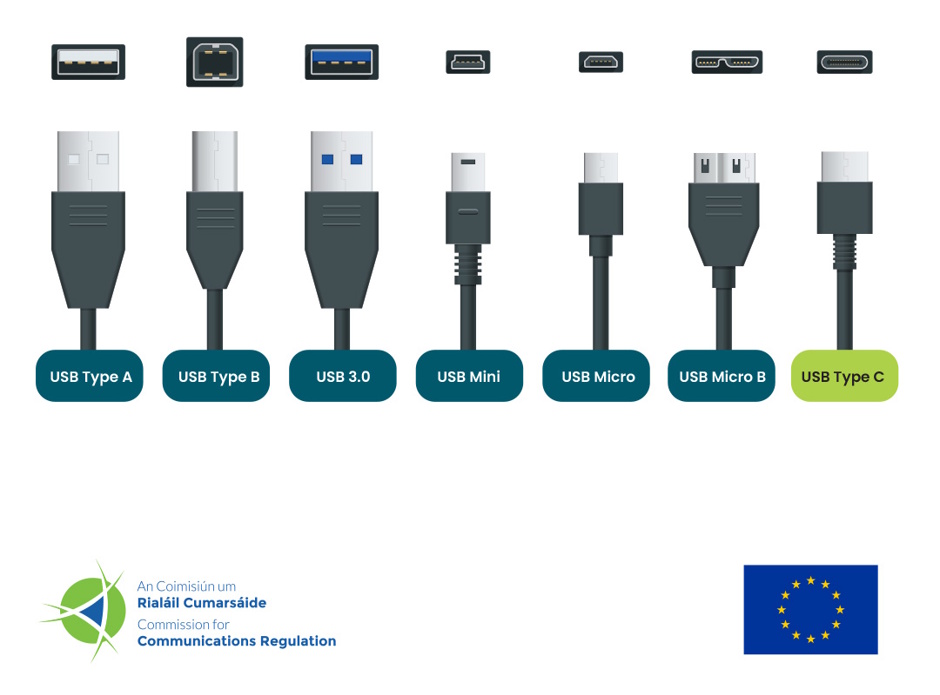
Devices within the scope of the CCD that are charged using a wired charger must use a USB-C charging port. This allows consumers to charge their devices with any USB-C charger, regardless of the device brand.
The CCD was introduced to make charging electronic devices simpler and reduce unnecessary waste and make charging information clearer for consumers.
It aims to do this by:
- Making USB-C the common charging port for the relevant devices;
- Helping consumers reuse compatible chargers across different devices;
- Reducing the need to buy a new charger with every new device purchase; and
- Making it easier for consumers to understand whether a charger is included with the product.
Labelling and Charging Information
Depending on whether the product is placed on the market with or without a charging device, one of the following two pictograms (measuring at least 12.8mm by 9.3mm) must appear on the packaging.
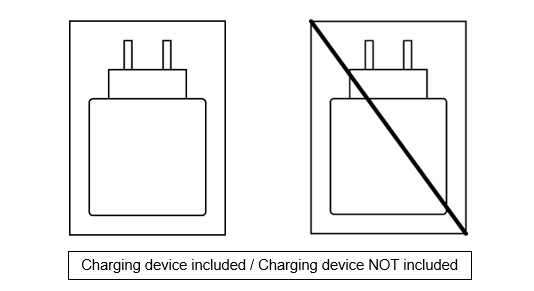
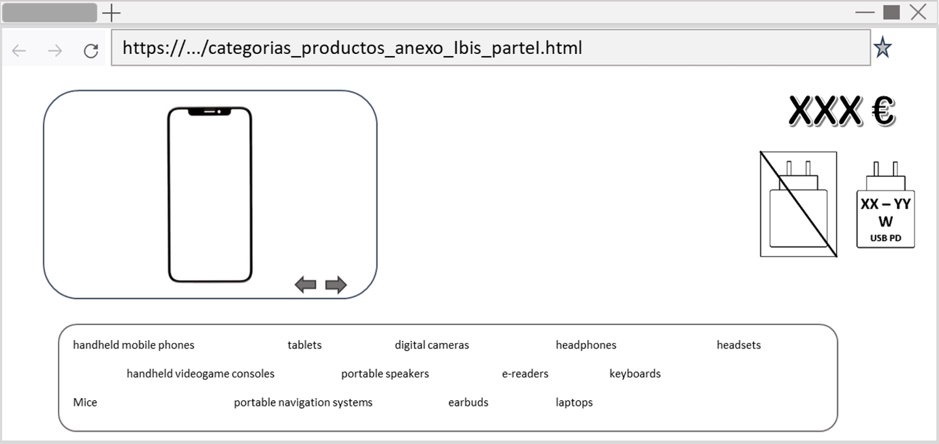
The pictogram must be displayed visibly and legibly. In the case of distance selling, it must be displayed close to the price (high-resolution images are available at: The EU Common Charger.
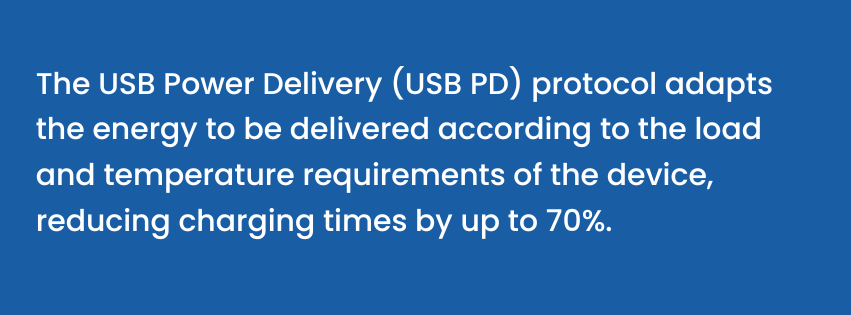
In addition, radio equipment which can be charged by means of a wired charging device at voltages exceeding 5 volts, at currents exceeding 3 amperes or at a power exceeding 15 watts must:
- Incorporate USB power delivery technology, as described in EN IEC 62680-1-2:2022, and;
- Ensure that any additional charging protocol allows full functionality of the USB power supply, regardless of the charging device used.
Information for Economic Operators
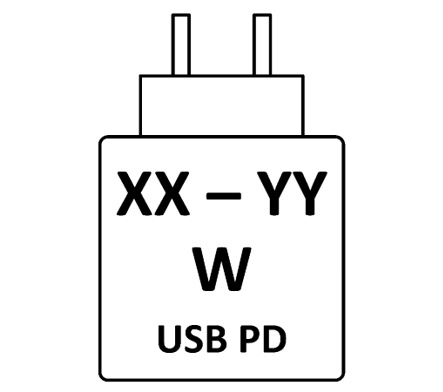
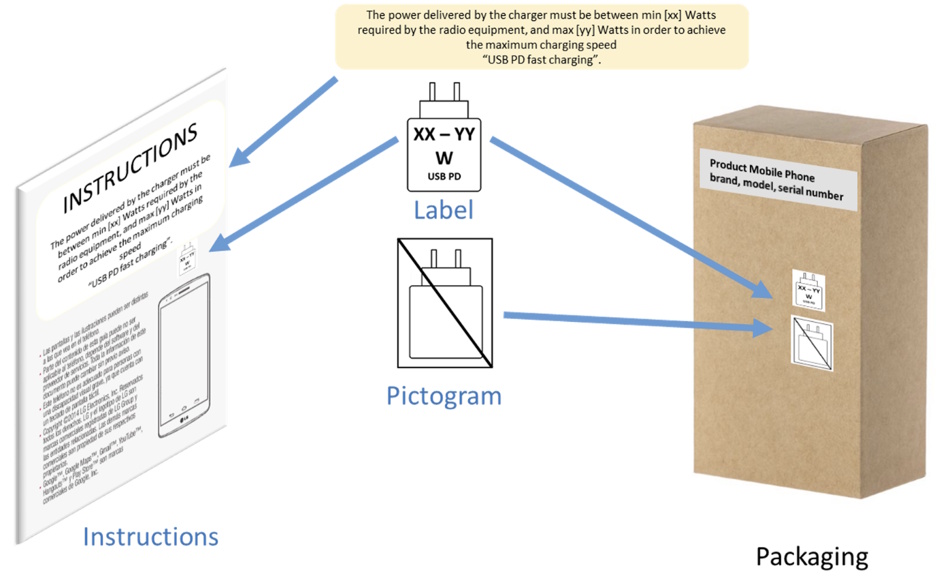
Information on the specifications relating to the charging capacities of radio equipment and compatible charging devices must appear in the instructions and on the packaging in the form of the following label (measuring at least 12.8mm by 9.3mm):
– XX: minimum power [W] required to recharge the system
– YY: power required [W] to reach maximum charging speed
The following text must appear in the instructions: “The power delivered by the charger must be between min [xx] Watts required by the radio equipment, and max [yy] Watts in order to achieve the maximum charging Speed”
The abbreviation USB PD is displayed if the installation is compatible with this protocol.
The label is printed in the instructions and on the packaging. If there is no packaging, the label must be affixed visibly and legibly to the radio equipment. If the size or nature of the radio equipment does not allow this to be done, the label may be printed as a separate document accompanying the radio equipment. In the case of distance selling, the label is affixed close to the price indication.
Further detail is available in the Official Journal of the European Union
Example of a system on sale in a shop and equipped with PD fast charging without a charger
Example of a system for sale online and equipped with PD fast charging, but not accompanied by a charger
Additional CCD Resources
For more information on the Common Charger Directive, consult the links below:
‘One Size Fits All’ Phone and Electronic Charger Directive to come into place (gov.ie)
The EU Common Charger
Directive (EU) 2022/2380 (Requirements of the Common Charger solution)
Official Journal of the European Union (Guidance for the interpretation of the Common Charger Directive)
Commission Delegated Regulation (EU) 2023/1717 (Updated references to technical specifications for wired charging)
Mobile phones and other handheld electronic devices must now share a Common Charger (30 December 2024)
Common Charger Directive (02 December 2024)